Our lab studies how circadian timing is generated and transformed across multiple levels of neural organization, from molecular clocks and pacemaker dynamics to output pathways, downstream circuits, and behavior. We focus on four connected questions: how the central pacemaker differs across species, how defined output pathways shape behavioral timing, how circadian time changes the state and function of downstream neural circuits, and how multiple behavioral rhythms are organized across the day.
Projects
Is the SCN equivalent across temporal niches?
Nocturnal and diurnal mammals organize behavior at opposite times of day, yet their suprachiasmatic nuclei (SCNs) have often been assumed to operate similarly. We compare the night-active laboratory mouse with the day-active African striped mouse (Rhabdomys pumilio) to test that assumption directly.
Although coarse measures of SCN activity can appear similar across species, our work reveals differences in intrinsic timing, responses to environmental signals, and the spatial organization of rhythms across the SCN. We are interested in how molecular and neuronal rhythms within the pacemaker are organized, and how differences in SCN dynamics are translated by downstream pathways into species-specific patterns of behavior.
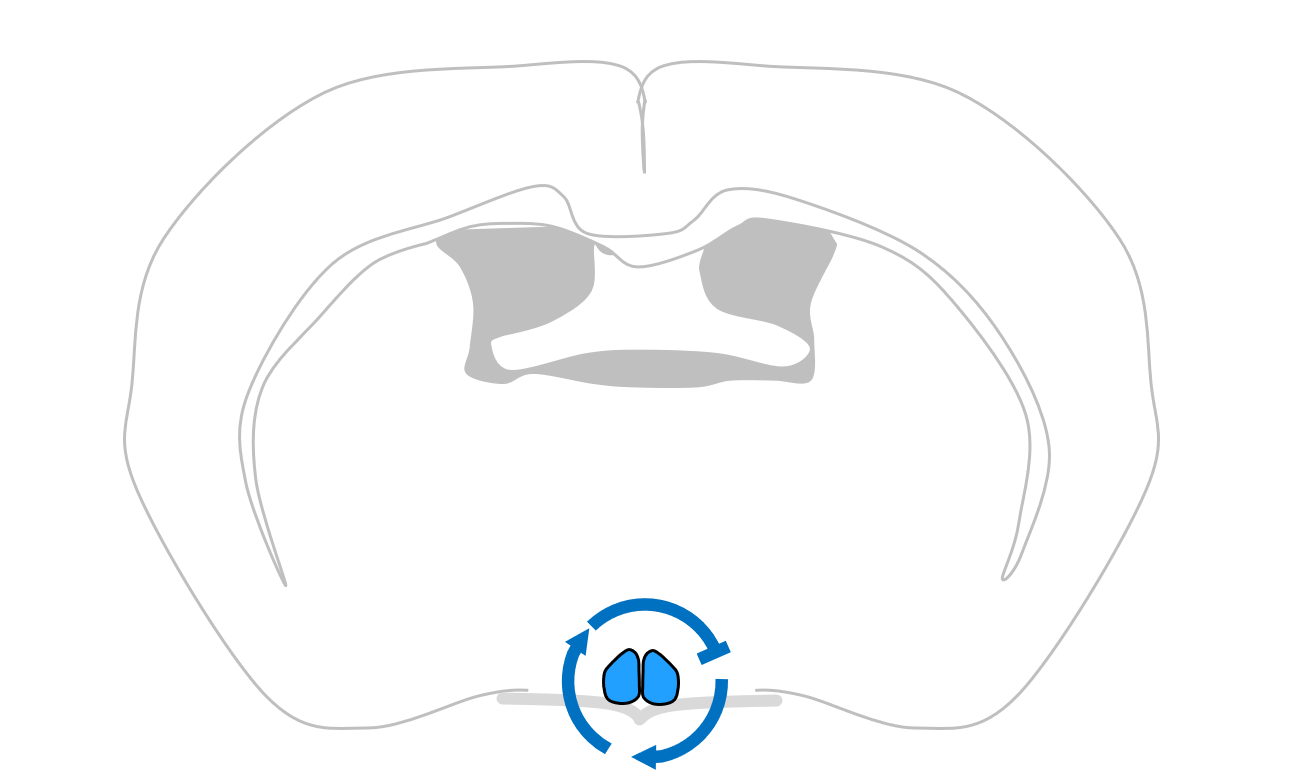
How does an SCN output pathway shape behavioral timing?
The SCN sends timing signals through multiple downstream pathways, but we still know relatively little about how individual pathways control specific features of daily behavior. Recently, we identified a sparse population of SCN neurons that projects to the dorsomedial hypothalamus (DMH) and regulates the timing and duration of locomotor activity.
We now use this and other pathways as a model for understanding how circadian timing is transmitted and transformed between the SCN and downstream neural circuits. A central question is how signals arriving from the SCN interact with local molecular clocks and other inputs within target neurons to generate appropriately timed behavioral and physiological rhythms.
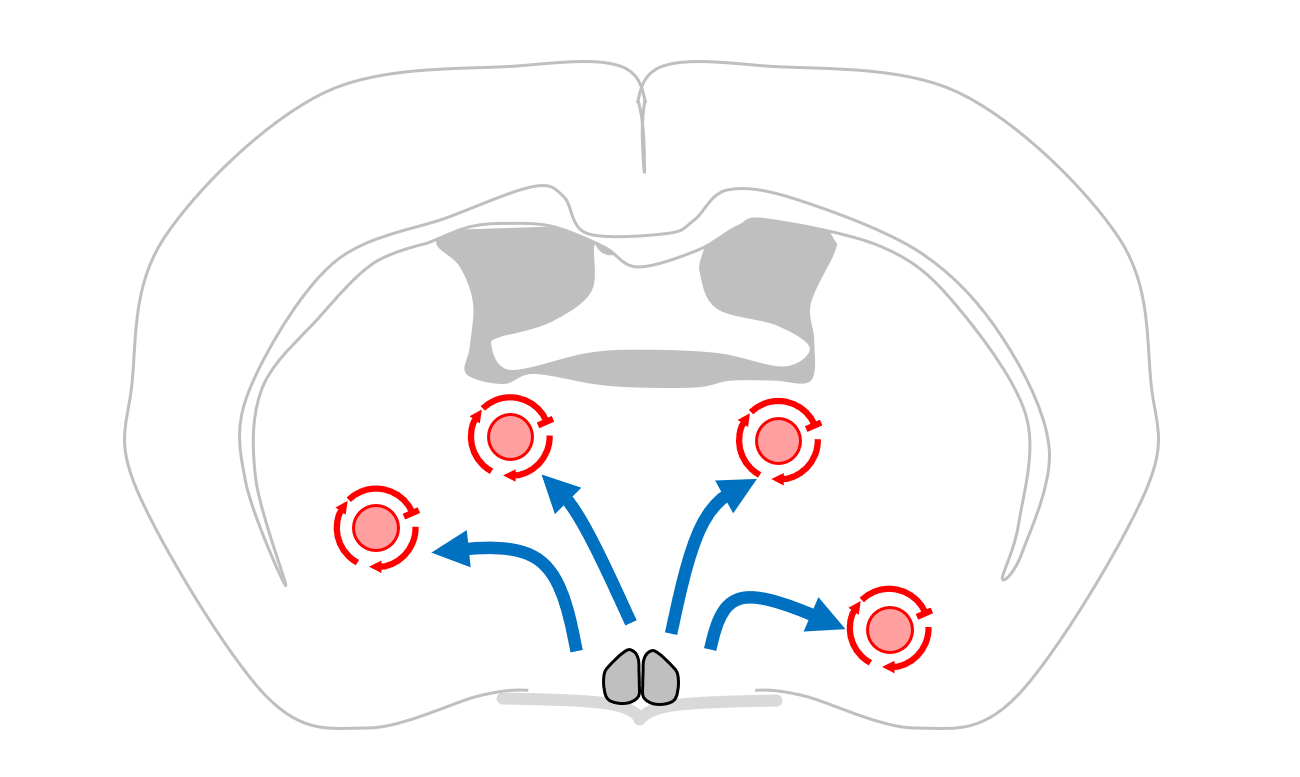
How does circadian time reorganize neural signaling and behavior?
Neural circuits do not operate in the same state throughout the day. Neuromodulator release, baseline neural activity, behavioral drive, and responses to salient events can all vary with circadian phase.
We use long-term fiber photometry and behavioral monitoring to measure neural signals repeatedly across days and weeks. In the nucleus accumbens, for example, we found that spontaneous dopamine release, reward-evoked dopamine signals, and reward-related behavior peak at different circadian phases. The relationships among these signals also change across the day.
More broadly, we ask how circadian signals and local molecular clocks shape the operating state of neural circuits and, in turn, alter the relationship between neural activity and behavior.
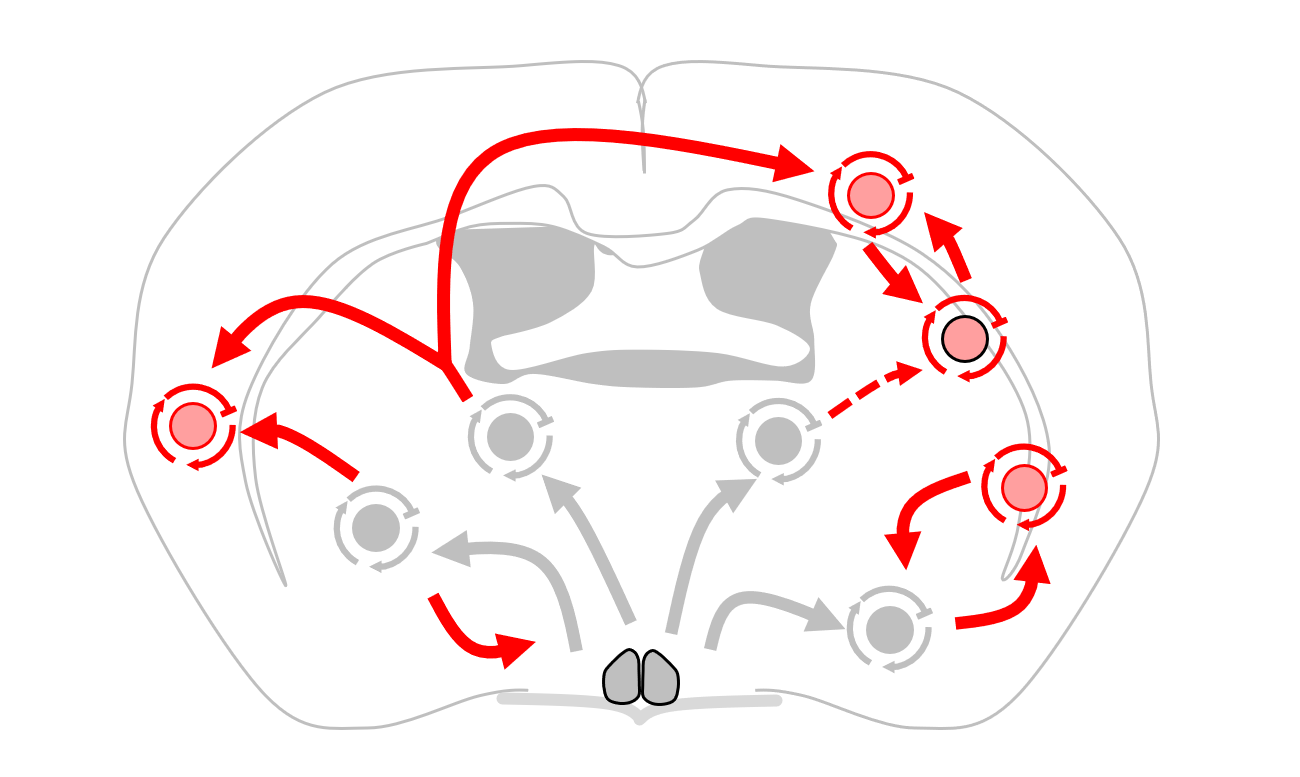
How are multiple behavioral rhythms organized across the day?
Circadian behavior is much richer than wheel running. Animals sleep, explore, feed, groom, rear, interact, and engage in many other behaviors that each have their own temporal organization.
We developed the Circadian Behavioral Analysis Suite (CBAS) to identify and quantify multiple home-cage behaviors continuously across days. This allows us to study not only whether individual behaviors are rhythmic, but also how their phases are organized relative to one another.
Using this approach, we investigate how behavioral timing is shaped by factors including sex, estrogen, and molecular clocks in downstream neural circuits. The broader goal is to understand the circadian organization of behavior as a coordinated system rather than as a collection of isolated rhythms.
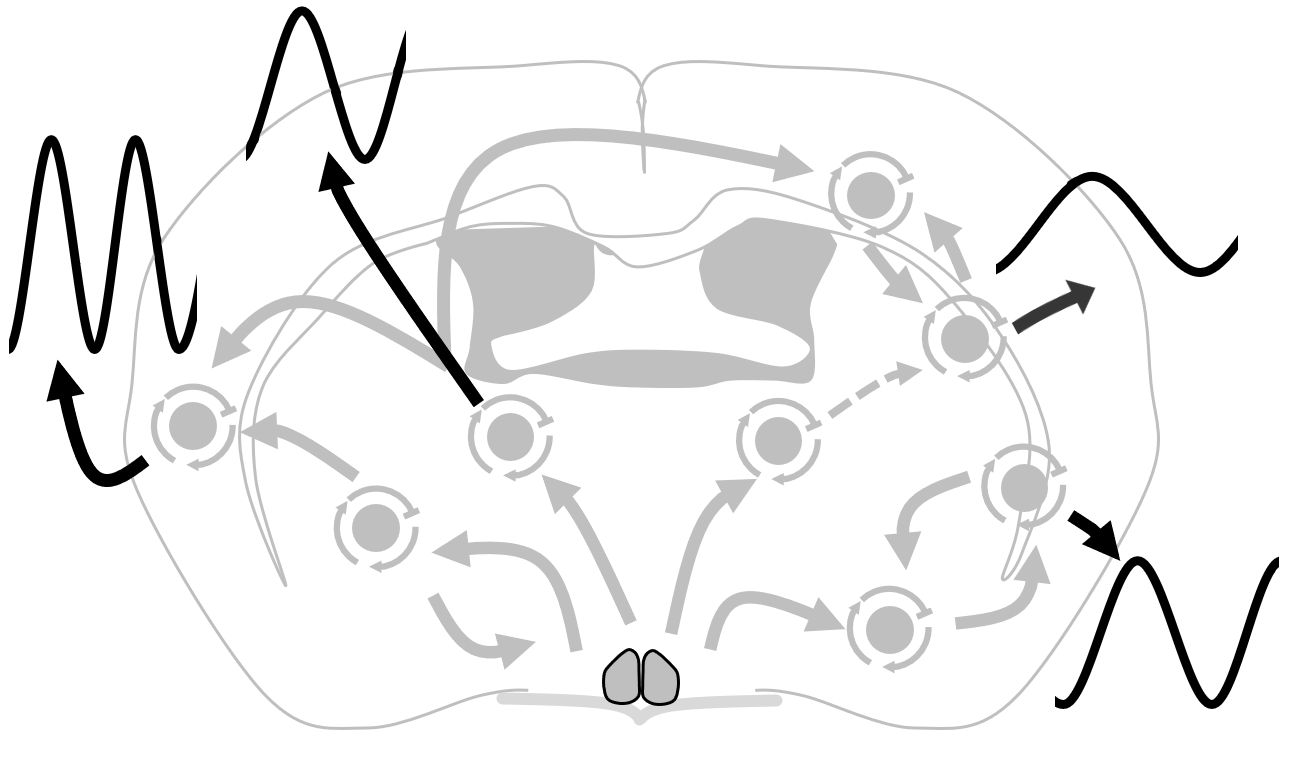
Where this is going
These four areas are closely connected. Our next goal is to understand how they interact: how differences in pacemaker dynamics are transformed by downstream pathways, how local molecular clocks and interacting output circuits generate and amplify biological rhythms, and how this organization breaks down in disease.
Current and developing directions include comparative SCN-output circuitry, molecular clocks in neuromodulatory systems, hormonal and neurotransmitter feedback, and the loss of circadian organization in disorders affecting cognition, reward, and behavior.