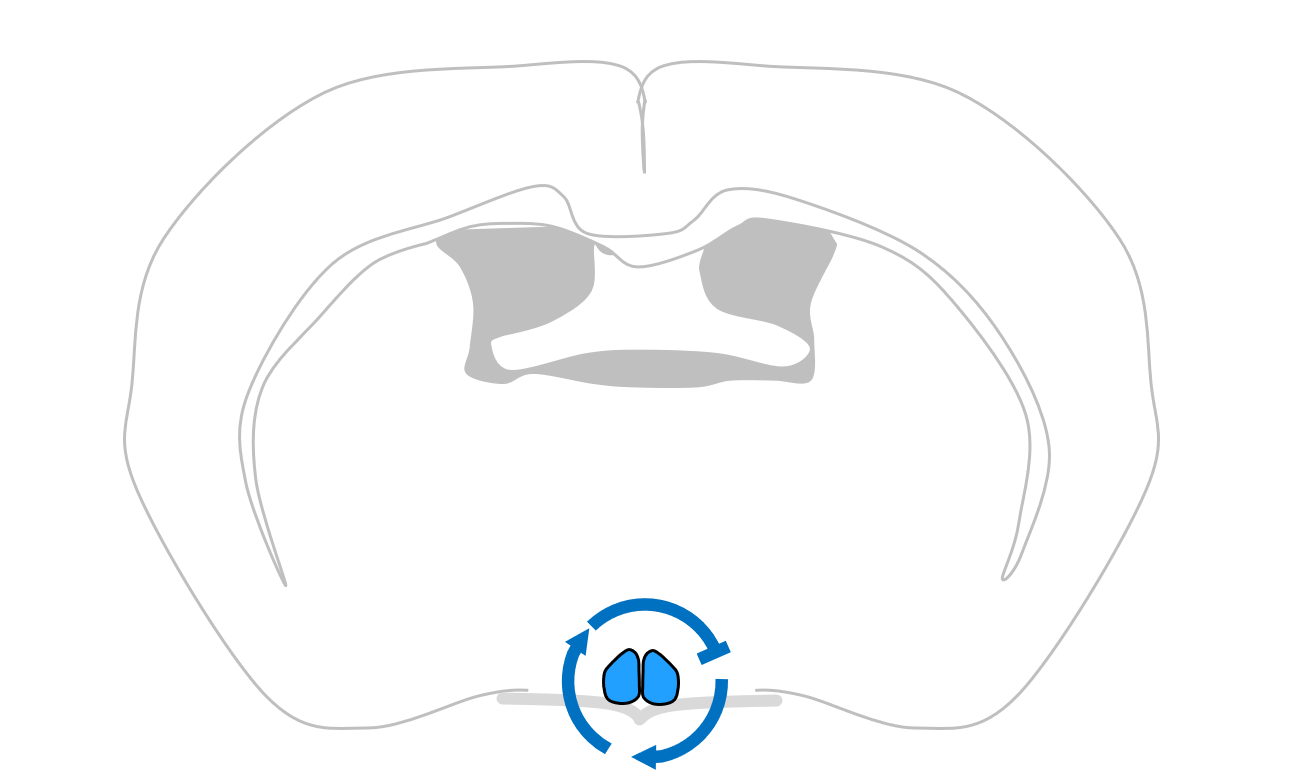
Nocturnal and diurnal mammals organize behavior at opposite times of day, yet their suprachiasmatic nuclei (SCNs) have often been assumed to operate similarly. We compare the night-active laboratory mouse with the day-active African striped mouse (Rhabdomys pumilio) to test that assumption directly.
Although coarse measures of SCN activity can appear similar across species, our work reveals differences in intrinsic timing, responses to environmental signals, and the spatial organization of rhythms across the SCN. We are interested in how molecular and neuronal rhythms within the pacemaker are organized, and how differences in SCN dynamics are translated by downstream pathways into species-specific patterns of behavior.
 Vanessa Muhl - Research Associate
 Daniela López Lorenzo - PhD Student
 Jeff Jones - Principal Investigator